The Foundation of Off-Road Mastery
Off-road riding is where ATVs truly shine. Unlike road vehicles, ATVs are engineered to conquer challenging terrain—but the machine is only as capable as the rider behind the handlebars. Whether you're navigating forest trails, climbing mountain paths, or powering through mud pits, proper technique transforms difficult obstacles into thrilling challenges.
Body Positioning: Your Most Important Tool
Before learning specific terrain techniques, master the fundamental body positions that apply to all off-road riding.
The Active Riding Stance
Unlike casual riding, aggressive terrain demands an active posture:
- Stand on the footpegs: Keep weight on your feet, not the seat
- Knees bent: Absorb impacts through your legs
- Elbows out: Provides leverage and control
- Head up: Look where you want to go, not at obstacles
- Loose grip: Death-gripping fatigues your arms and reduces control
Weight Distribution Principles
Your body weight is a powerful tool for controlling your ATV:
- Forward: Prevents front wheel lift on climbs
- Rearward: Prevents nose-diving on descents
- Lateral: Counterbalances on side slopes
- Centered: Default position for flat terrain
Practice shifting your weight smoothly while riding—jerky movements upset the ATV's balance.
Throttle and Brake Control
The Smooth Operator Approach
Aggressive throttle and brake inputs are your enemy off-road:
- Gradual acceleration: Prevents wheel spin that digs you into trouble
- Progressive braking: Maintains traction and control
- Engine braking: Use lower gears to control descent speed
- Constant momentum: Steady throttle often beats power surges
Reading the Terrain
Anticipate what's ahead and prepare:
- Scan 15-20 meters ahead while riding
- Plan your line before entering challenging sections
- Identify potential hazards and escape routes
- Adjust speed before obstacles, not during
Mud and Water Crossings
Mud is simultaneously one of the most fun and challenging terrain types. Here's how to handle it like a pro.
Entering Mud
- Assess depth: Use a stick or walk if necessary
- Maintain momentum: Stop, and you might stay stopped
- Choose your line: Look for tire tracks indicating solid bottom
- Moderate throttle: Steady power beats full throttle
While in the Mud
- Keep straight: Turning increases resistance and risk of getting stuck
- Stand up: Lower center of gravity and better control
- Steady throttle: Consistent power maintains momentum
- If slowing: Don't panic and give more throttle—you'll dig in
If You Get Stuck
- Stop immediately: Spinning tires only makes it worse
- Assess the situation: Determine what's holding you
- Rock gently: Try forward and reverse to create space
- Use momentum: Short bursts of throttle with rocking motion
- Get help: Know when to use a winch or tow strap
Water Crossings
- Scout first: Walk across if possible to check depth and bottom
- Steady pace: Slow and consistent prevents water ingestion
- Avoid bow wave: Going too fast pushes water into the airbox
- After crossing: Apply light brakes to dry brake pads
Hill Climbing Techniques
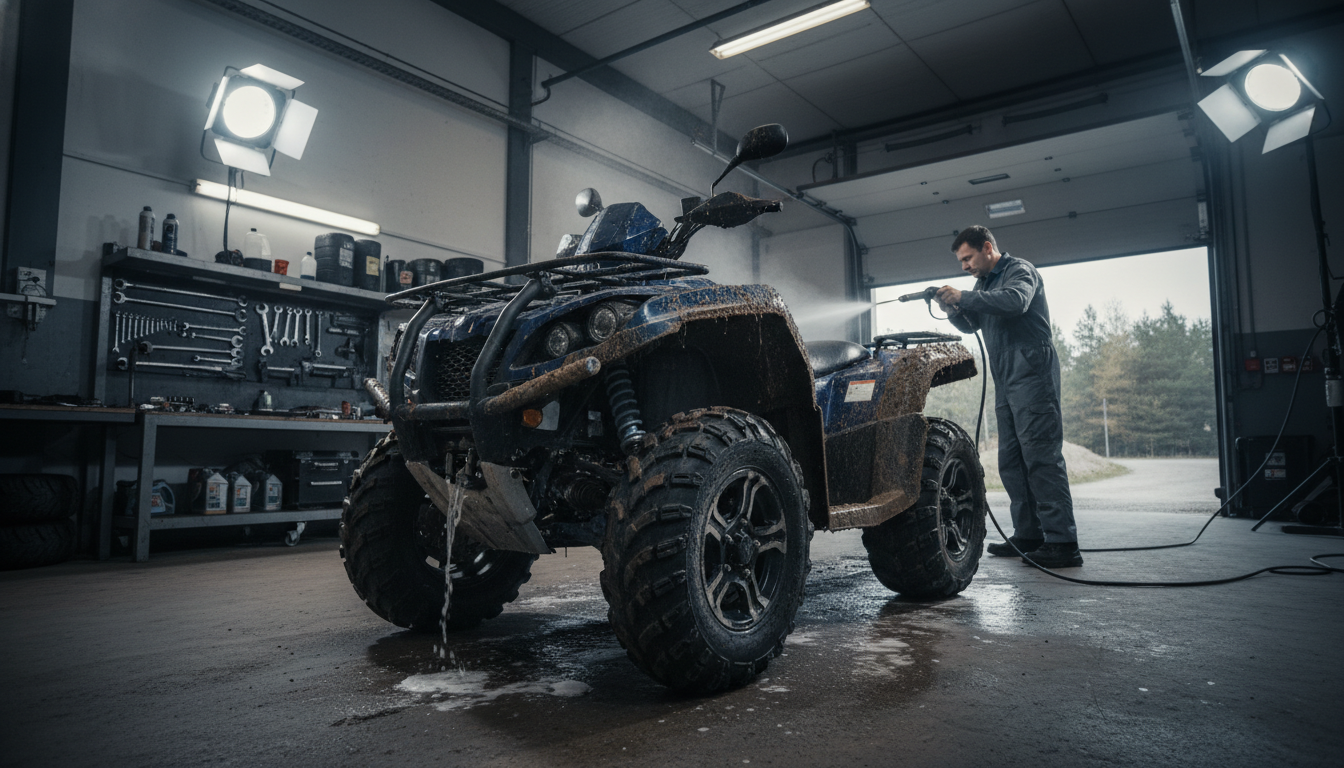
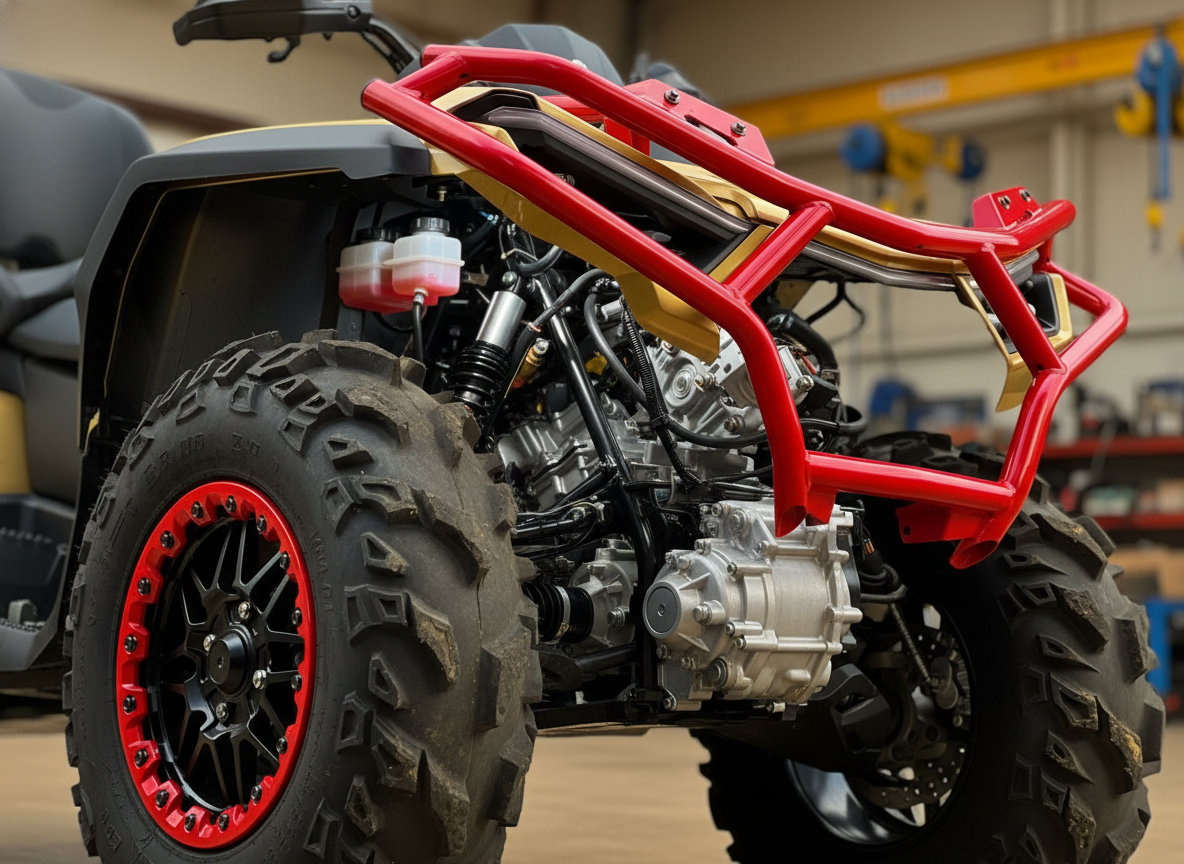
Hills are where powerful ATVs like the MMC Fury MUD 1000R really prove their worth—but technique matters as much as power.
Pre-Climb Assessment
- Read the hill: Look for ruts, rocks, or soft spots
- Choose your line: The straightest path is usually best
- Check what's over the crest: Never blind climb
- Have an escape plan: Know how to bail safely
Ascending
- Build momentum: Enter with appropriate speed
- Lean forward: Keep weight over front wheels
- Stand up: Move even further forward
- Steady throttle: Consistent power is key
- Commit: Half-hearted attempts often fail
If You Lose Momentum
This is dangerous—know the proper technique:
- Apply brakes immediately: Prevent rolling backward
- Engage parking brake: Secure the ATV
- Dismount uphill: Always step off on the high side
- Assess options: Turn around or get assistance
Never attempt to ride backward down a hill.
Descending
- Low gear: Engine braking is your friend
- Lean back: Shift weight to rear
- Gradual braking: Use both front and rear evenly
- Straight line: Avoid turning on steep descents
- No sudden inputs: Smooth and steady controls
Rocky Terrain
Rocks demand precision and patience.
Reading the Rock Garden
- Identify stable rocks: Large, embedded rocks are safe
- Spot loose rocks: These can roll or shift
- Look for lines: Previous tracks often indicate the best path
- Plan wheel placement: Know where each wheel will go
Crossing Techniques
- Slow speed: Momentum matters less than precision
- Feather the clutch: Control power delivery carefully
- One wheel at a time: Let the ATV work through obstacles
- Protect underbody: Choose lines that avoid scraping
Dealing with Large Rocks
- Approach angle: Hit rocks at an angle for smoother transitions
- Light throttle: Just enough to maintain progress
- Allow flex: Let the suspension work
- Patience: Rushing causes damage and tip-overs
Side Hill Traversing
Riding across slopes is inherently risky. Minimize time on side hills, but when necessary:
Technique
- Lean uphill: Your body counterbalances the slope
- Weight on uphill peg: Helps maintain traction
- Look across the slope: Plan your path
- Steady throttle: Avoid acceleration that could cause uphill rollover
Dangers to Avoid
- Never turn downhill abruptly: High rollover risk
- Avoid stopping on slopes: Loss of momentum is dangerous
- Watch for soft spots: These cause unexpected slides
- Know the rollover limit: Exit before the slope exceeds it
Sand and Dune Riding
Sand riding has unique challenges and rewards.
Key Techniques
- Lower tire pressure: Increases footprint and traction (check manual for limits)
- Momentum is king: Stop in soft sand and you're digging
- Wide turns: Tight turns cause loss of momentum
- Stay smooth: Sudden inputs cause bogging
Dune Climbing
- Straight approach: Angle climbs cause rollovers
- Check the top: Never crest blind
- Commit fully: Half-speed attempts fail
- If stuck at top: Stay on machine and let it settle before reversing
Forest and Trail Riding
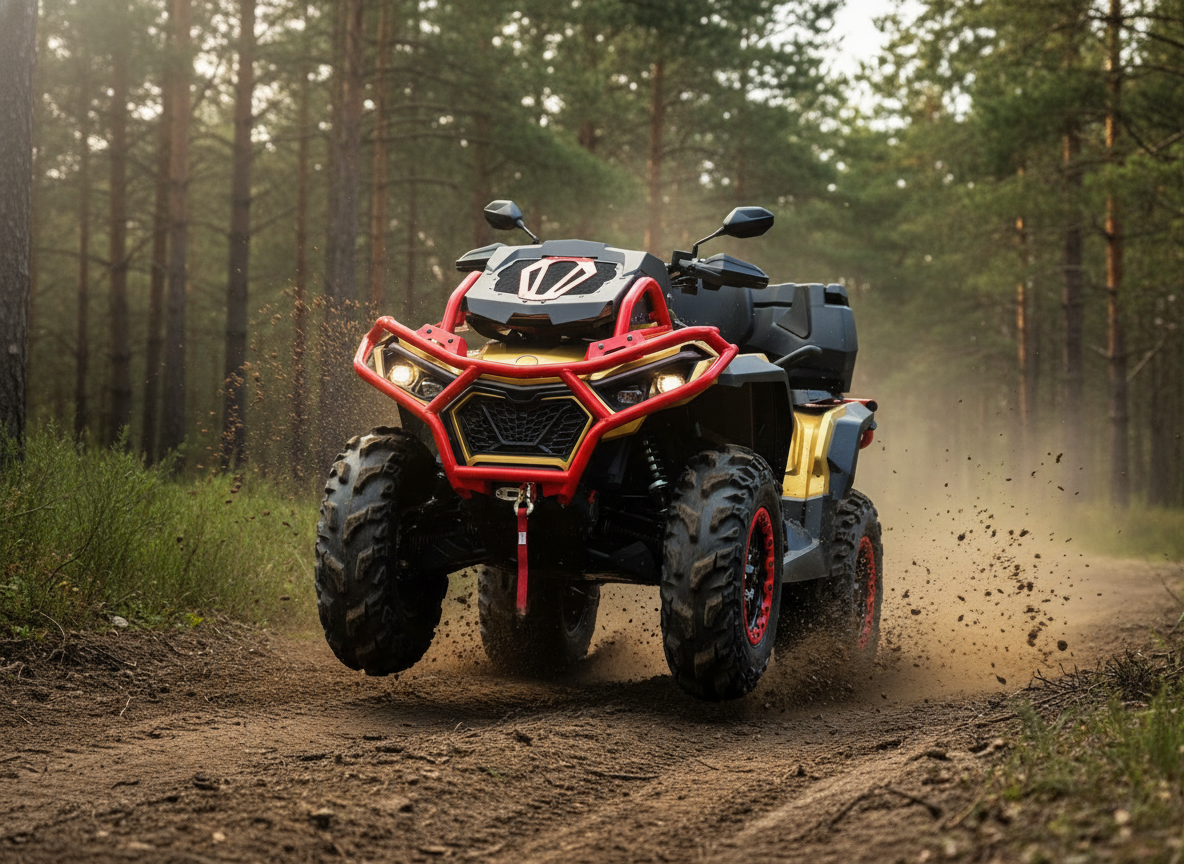
Technical trails through forests require finesse.
Visibility
- Speed for conditions: Only go as fast as you can see
- Anticipate corners: Other riders could be coming
- Use peripheral vision: Spot obstacles early
- Night riding: High-quality lights and reduced speed
Obstacle Negotiation
- Logs: Approach straight, pop front wheel over, follow with rear
- Roots: Treat like small logs, cross at angles
- Ruts: Follow or straddle—don't fight them halfway
- Low branches: Duck or deflect, never grab
Safety Essentials
No technique discussion is complete without safety reminders.
Gear Requirements
- Helmet: DOT-approved, full-face recommended
- Eye protection: Goggles or face shield
- Gloves: Protect hands from branches and blisters
- Boots: Over-ankle support minimum
- Long sleeves and pants: Protection from brush and debris
Trail Etiquette
- Ride within your limits: There's no shame in walking sections
- Respect the environment: Stay on designated trails
- Ride with partners: Never solo in remote areas
- Carry essentials: First aid, tools, water, communication
Emergency Preparedness
- Know your location: GPS or map familiarity
- Share your plans: Tell someone where you're going
- Emergency contacts: Programmed and accessible
- Basic first aid: Know how to treat common injuries
Progression and Practice
Becoming a skilled off-road rider takes time and deliberate practice.
Building Skills
- Master basics first: Body position, throttle control, braking
- Progress gradually: Don't attempt advanced terrain too soon
- Learn from others: Ride with experienced mentors
- Practice specific skills: Dedicate sessions to particular techniques
Analyzing Your Rides
After each ride, reflect on:
- What sections challenged you?
- Which techniques worked well?
- What would you do differently?
- What skills need more practice?
Conclusion
Off-road mastery is a journey, not a destination. Every trail teaches something new, and every ride improves your skills. A powerful ATV like the MMC Fury MUD 1000R gives you the capability to tackle serious terrain—but it's your developing technique that transforms capability into achievement.
Start with the fundamentals: body position, smooth controls, and terrain reading. Progress to specific techniques for different conditions. Always respect the risks, wear proper gear, and ride within your abilities.
The most skilled off-road riders aren't those who attack every obstacle—they're the ones who read the terrain, choose their lines wisely, and make difficult sections look effortless. That mastery comes from practice, patience, and a commitment to continuous improvement.
Now get out there and ride.